


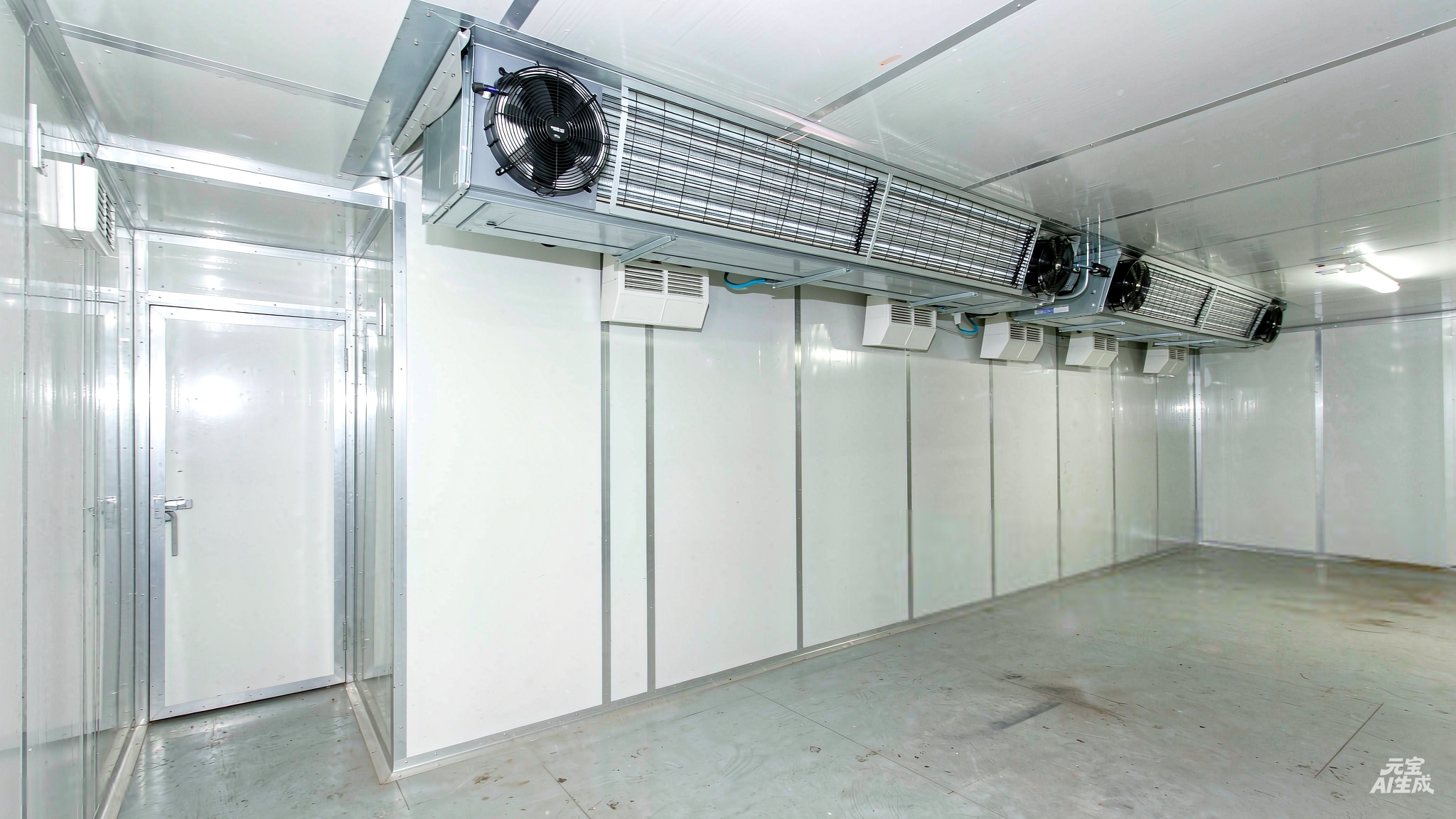
Category: Cold Storage / Refrigeration
Selecting the correct evaporator is one of the most important decisions when building or upgrading a cold storage room. The right unit ensures stable temperature, energy efficiency, and long service life — while the wrong choice leads to frost buildup, uneven cooling, and higher electricity bills.
In this guide, we break down the key factors every buyer, contractor, and refrigeration OEM should consider before placing an order.
1. Understand Your Cooling Capacity Requirements
The first step is to calculate the required cooling capacity (in Watts or BTU/h) based on your cold room volume, target temperature, and heat load (including product incoming temperature, ambient conditions, and door openings).
- For small cold rooms (≤ 20 m³): compact ceiling-mounted evaporators are usually sufficient.
- For medium to large cold storage: opt for high-capacity, multi-fan units with matching condenser capacity.
At XCOOT, we help customers calculate the exact thermal load before recommending a model — so you never over- or under-size your system.
2. Choose the Right Fin Type and Fin Pitch
Fin design directly affects heat transfer efficiency and frost resistance — two critical factors in cold room applications.
| Fin Pitch | Best For |
| 4–6 mm (wide) | Low-temperature / freezer rooms (-18 °C to -25 °C) — reduces frost bridging |
| 3–4 mm (medium) | Standard chiller rooms (0 °C to +5 °C) |
| Hydrophilic / gold fin | High-humidity environments — improves corrosion resistance |
For most cold room projects, a fin pitch of 4.5–6 mm offers the best balance between heat transfer and frost tolerance. Stainless steel or hydrophilic coated fins are recommended for humid or corrosive environments.
3. Match the Refrigerant and Circuit Design
Your evaporator must be compatible with the refrigerant used in your system — whether R404A, R134a, R290, R448A/R449A (low-GWP alternatives), or CO₂ (R744) in transcritical systems.
- Confirm refrigerant type and operating pressure rating with your supplier.
- Ask for the circuit diagram — proper distributor and capillary sizing ensures even refrigerant distribution across all circuits.
- For retrofits, verify the connection size (inlet/outlet) matches your existing piping.
4. Consider Defrost Method and Airflow
Frost accumulates during normal operation, so a reliable defrost strategy is essential.
- Electric defrost: most common, easy to control, suitable for small to medium units.
- Hot gas defrost: faster, more energy-efficient for large cold rooms.
- Natural / off-cycle defrost: simple, but only for specific applications.
Also check the airflow pattern — centrifugal fans provide stronger, more directional airflow for long rooms, while axial fans offer uniform distribution in compact spaces.
5. Don’t Overlook Build Quality and After-Sales
A good evaporator is more than specs on paper. Look for robust casing (pre-painted steel or stainless steel), properly expanded tubes (to ensure tight contact with fins), and a manufacturer that provides pressure testing reports and spare parts support.
XCOOT evaporators are 100% pressure-tested before shipment and backed by our engineering team for installation guidance and ongoing support.
Conclusion
Choosing the right cold room evaporator comes down to four things: correct capacity, suitable fin design, refrigerant compatibility, and dependable build quality. If you are unsure about any of these, our team can provide a custom recommendation based on your project drawings and operating conditions.
CTA (end of article)
Need help sizing your cold room evaporator? Contact XCOOT for a free technical consultation and quotation within 24 hours.