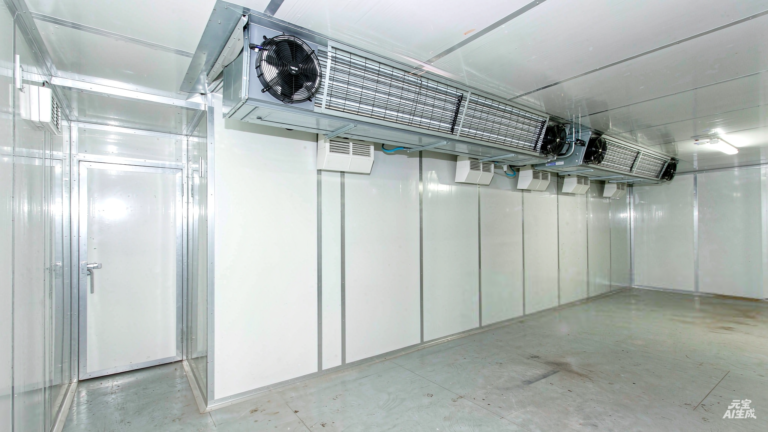

Air-cooled and water-cooled condensers both reject heat, but they suit different operating conditions. Understanding their differences helps engineers and equipment owners select a system that balances efficiency, maintenance, and installation cost.
Air-Cooled Condensers
Air-cooled condensers transfer heat to ambient air through fins and fans. They do not require a cooling-water circuit, water treatment, pumps, or a cooling tower. This makes them practical for many HVAC, refrigeration, and remote installations.
Advantages
- Simple installation and water-free operation
- Lower water consumption
- Generally straightforward maintenance
- Suitable for locations without reliable water supply
Water-Cooled Condensers
Water-cooled condensers reject heat through a water loop. They can provide strong and stable performance when water temperature is controlled, especially in large systems or warm climates.
Considerations
- Requires pumps, piping, and water management
- Needs regular cleaning and scale control
- May achieve better efficiency under suitable conditions
- Installation is usually more complex
How to Decide
Compare ambient conditions, water availability, energy prices, local regulations, space, noise requirements, and maintenance capability. Also assess the complete lifecycle cost rather than comparing equipment prices alone.
Conclusion
The right condenser depends on the application. Air-cooled designs offer simplicity and lower water dependence, while water-cooled systems can deliver efficient heat rejection when a properly maintained water circuit is available.